Your online presence depends heavily on picking the right brandable domain name in today’s digital world. People now find businesses through online searches rather than word-of-mouth. This makes your domain choice crucial. Building your brand identity boils down to two main options – you can pick a unique, memorable brandable domain or go with a descriptive one that shows what you offer.
Brandable domains help you create a unique identity that strikes a chord with your audience. Descriptive domain names offer their own benefits – they tell visitors what your site does before they click. This choice matters even more since 66% of consumers pay attention to brands that arrange with their values. The biggest problem many businesses face is getting a unique company name that’s still available as a domain.
This piece breaks down the differences between brandable and descriptive domains and shows which option ended up driving more sales. You’ll learn what makes a brandable domain name special and how it stacks up against descriptive options. This knowledge will help you pick the right domain that fits your business goals and target audience.
Before deciding between a brandable domain name and a descriptive one, it’s helpful to understand the full domain selection process first. This makes it much easier to see how each factor fits into the bigger picture. You can start with this guide: How to Choose a Domain Name
Understanding the Two Domain Types
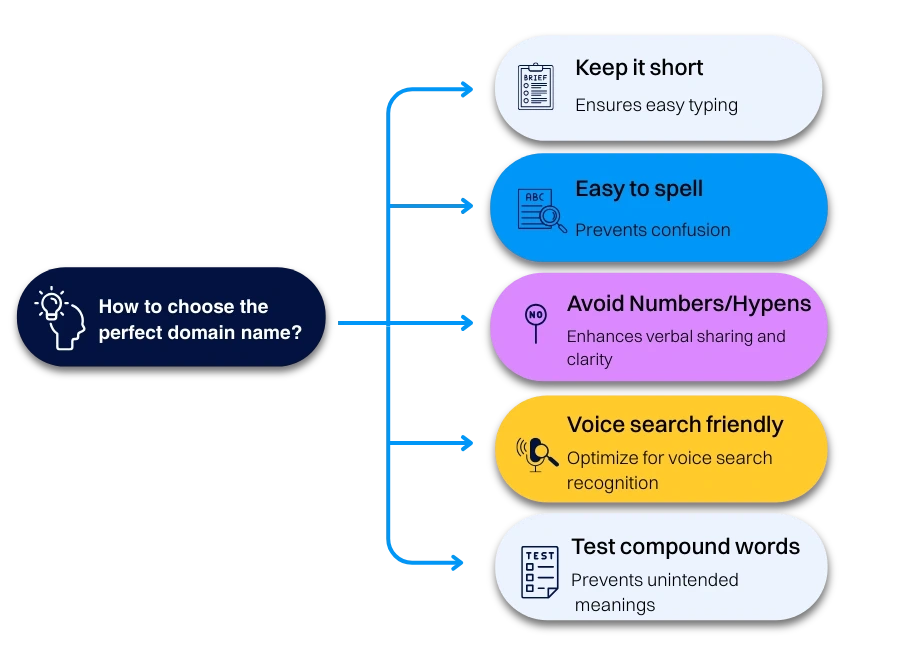
Image Source: Dynadot
Domain names act as your business’s digital address online. You need to understand the core differences between brandable and descriptive domains to pick the right one that matches your business goals.
What is a brandable domain name?
Brandable domain names work like “empty vessels” – they don’t directly describe what you do or sell. These domains are unique, memorable, and flexible, giving you room to build your own brand identity.
A brandable domain comes in two forms: it’s either a made-up word like “Google” or a regular word used creatively to show your business’s character rather than what it does. Think about “Zappos” versus “Shoes.com” or “Amazon” versus “Booktopia”.
Here’s what makes a domain truly brandable:
- Memorable sound patterns that stick in people’s minds (through alliteration or unique pronunciation)
- Concise length (under 15 characters works best) so it’s easy to type and display
- Spelling clarity without weird letter swaps or extra punctuation
- Timeless appeal that avoids trendy terms
Brandable domains let businesses grow beyond their original focus and help create loyal, passionate customers through their unique identity.
What is a descriptive domain name?
A descriptive domain name tells people exactly what your business does. Visitors know right away what you offer when they see your website address. To name just one example, “wine.com” leaves no doubt about what they sell.
Descriptive domains explain themselves. Visitors land on your site knowing what to expect, which makes them want to check out different pages. These domains are also easier to say, spell, and remember – that’s good news for your business.
The idea behind picking a descriptive domain is to use keywords that show what you sell or do. Let’s say you only sell mountain bikes – “mountainbikes.com” makes better sense than just “bikes.com“.
Brandable domain name examples vs descriptive examples
Some prominent brandable domains are “Airbnb.com,” “Spotify.com,” and “Lego.com“. These names don’t tell you what they do right away, but great branding and service quality have made them household names.
Lego’s name comes from Danish words “leg godt,” meaning “play well,” and Microsoft shows its focus on Microcomputer Software. These names create emotional bonds without spelling out what they offer.
On the flip side, descriptive domains like “wine.com,” “digitalmarketer.com,” “runningshoes.com,” and “tennis.com” tell their story at first glance.
Brandable domains give you more room to grow and branch out. Your name isn’t tied to specific keywords, so your business can evolve past its original offerings. These domains are also easier to trademark.
Pros and Cons of Each Domain Type
Image Source: SlideUpLift
The choice between domain types comes down to understanding their unique strengths and limitations. Your business goals and marketing strategy will help you pick the right option.
Advantages of brandable domains
Brandable domain names help businesses stand out from their competitors. These names are easier to trademark and protect legally than descriptive ones. They create emotional connections and build community with customers. Research shows that customers are 2.5 times more likely to participate with brands that have matching domain names.
These domains let businesses grow beyond their original focus without getting boxed in by their name. To cite an instance, see how Amazon would have hit a wall if they had started as “booksforsale.com“. Yes, it is easier to remember brandable domains—people recall “Lego” more quickly than “toybricks.com“.
Disadvantages of brandable domains
Brandable domains have their challenges. They don’t have keywords that could boost SEO performance. Companies must spend more to build recognition since these names don’t tell people what the business does.
Building brand awareness costs money. Owners need bigger budgets for marketing, advertising, social media, and logo creation. The “blank slate effect” means these domains start with no keyword signals and need work to establish topic relevance.
Advantages of descriptive domains
Descriptive domain names tell visitors exactly what a business does. Users find what they expect, which builds trust and keeps them on the site longer. These domains often contain keywords that potential customers look for, which might help with search engine rankings.
Money-wise, descriptive domains can be better value. “budget.cruises” sold for $250 while “budgetcruises.net” cost $2,400. These names need less explanation about the business purpose, which makes marketing simpler and might reduce paid advertising costs.
Disadvantages of descriptive domains
Notwithstanding that, descriptive domains have their limits. They lack the personality and emotional pull of brandable domains. Dictionary keyword domains struggle to be unique—many businesses use similar general terms.
Trademark protection becomes a big headache. Common descriptive terms rarely get trademark approval, which can lead to legal issues. Without trademark protection, businesses become targets for impersonators or identity thieves.
Descriptive domains can hold back business growth. A too-specific domain becomes problematic when the company branches out into new products or services. This explains why major brands prefer names that connect emotionally instead of just describing their products.
SEO and Discoverability Impacts
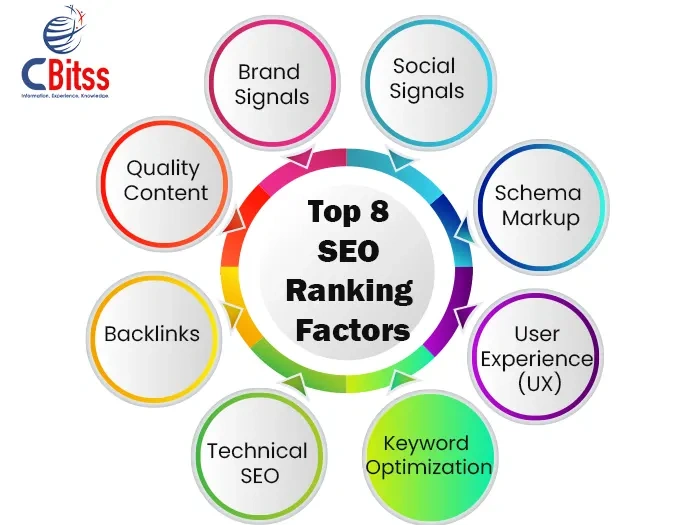
Image Source: CBitss Technologies
Search engines look at domain names differently today compared to the past. These changes significantly affect your online visibility.
Keyword relevance in descriptive domains
Keywords in domains don’t carry the same weight they used to. Google’s 2012 EMD (Exact Match Domain) algorithm update changed how descriptive domains ranked. These domains now offer subtle benefits. Users are twice as likely to click on domains that contain their search query keywords. This user behavior sends positive signals to search engines.
Descriptive domains help shape relevance perceptions for users and algorithms. Your domain can improve visibility when it matches what people search for. The relevance still matters even though domain keywords “have hardly any effect beyond appearing in breadcrumbs”.
SEO challenges with brandable domains
Brandable domain names don’t have keywords that signal relevance to search engines. This creates an SEO challenge from the start. These domains need quality content, backlinks, and technical performance to build topical authority.
The original disadvantage tends to even out as time passes. Google now focuses on content quality and user experience instead of domain keywords. A strong brand with excellent content can outperform keyword-heavy domains that have weaker content.
Local SEO: Does a descriptive name help?
Geographic terms in domains can boost local relevance for location-specific businesses. Sites with country-code top-level domains (like .uk) or location keywords tend to perform better in local searches. Research shows .berlin domain sites ranked 1.18× higher in Berlin local searches than similar .de or .com sites.
The geographic advantage goes beyond domain extensions. Mark Preston’s case study revealed his site ranked for “Preston SEO” because his domain contained “Preston” – even though he wasn’t located there.
Domain names may not directly affect SEO like before, but they influence user behavior and search visibility through indirect signals.
From an SEO perspective, keywords in domain names are far less important than they used to be. Search engines now focus much more on content relevance and user intent, which is explained in more detail in this guide: How to Choose a Domain Name for Long-Term Growth
Branding, Memorability, and Emotional Appeal
Your brand’s online identity heavily depends on how visitors notice and remember your domain name. Choosing between descriptive and brandable options affects much more than just your web address.
Brandable domain name characteristics that drive recall
Memorable brandable domains make use of specific cognitive principles. They create a balance of hard consonants with soft vowels (like “Uber” or “Spotify”) and stay phonetically simple with fewer syllables. Names that sound familiar yet remain unique create stronger mental anchors. This explains why invented words like “Google” work well—they feel familiar while staying unique. Voice search has made pronunciation a vital factor, since awkward or confusing names create friction in referrals.
Emotional connection: brandable vs descriptive
Brandable domains excel at building emotional connections with audiences. Research shows that 66% of consumers choose brands that line up with their values, which makes emotional resonance vital. Domain names like “Calm.com” signal emotional tranquility right away, while “Brave” for a web browser suggests confidence. Descriptive domains focus on clarity over emotion and emphasize transparency rather than personality. This difference becomes especially important when you have passive audiences who aren’t actively searching for your product—they respond better to emotional branding than feature descriptions.
Trademark and legal protection differences
Legal protection offers the clearest advantage for brandable domains. Invented or unique names are easier to trademark, which provides stronger nationwide ownership rights. Descriptive domains using common terms don’t deal very well with trademark challenges—courts often call them too generic for registration. This matters because trademark registration gives you exclusive rights throughout the United States and can last indefinitely with proper maintenance. Companies without trademark protection remain vulnerable to impersonation and brand dilution.
Domain name length plays a major role in memorability and ease of sharing, which is especially important when choosing between brandable and descriptive domains. For a deeper breakdown, see: Domain Name Length Best Practices
Choosing the Right Domain for Your Business Goals
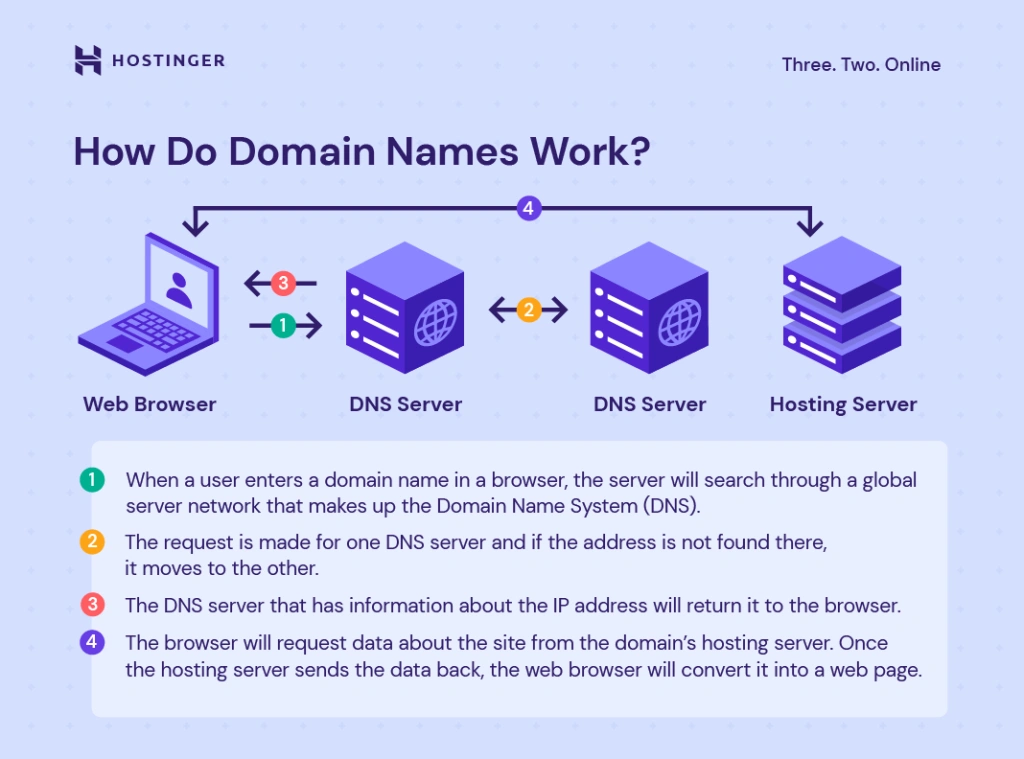
Image Source: Hostinger
Your digital identity starts with understanding how different domain types line up with specific business goals. The choice you make ended up shaping your long-term growth potential and original market position.
How to choose a brandable domain name
Good brandable domains usually have fewer than 15 characters—traffic drops about 2% [link_1] for each character after seven. Names that pass the “radio test” (easy to spell when heard) work best, so you should stay away from hyphens or numbers that might confuse people. AI-powered tools like namekit.app or namefinder.io can help you generate creative options based on your business features. Small focus groups are a great way to get first impressions and test how memorable your domain choices are.
When to use descriptive domains for faster traction
Descriptive domains make sense when you need immediate clarity. Studies reveal that 77% of consumers think domain names matter when they evaluate brands online. The research also shows that 47% of people rated memorability as their top priority for domains. Local businesses benefit the most—78% of UK consumers trust .co.uk domains more than .com alternatives.
Scalability and future-proofing your domain
A name that’s broad enough lets your business grow naturally. Domains like “cityflowers.com” can box you in and limit future expansion. “Cityblooms.com” works better because it gives you room to add new products and services. Buying several variations helps protect your brand identity and catches common misspellings.
Hybrid domain strategies: best of both worlds
You can mix these approaches by using your brand name with relevant extensions (like amazon.jobs). Tools like domainsnapai help create domain options that balance memorability with discoverability. Another option is to keep a global parent domain while setting up region-specific domains for major markets. This strategy gives you both brand consistency and local relevance.
Comparison Table
| Characteristic | Brandable Domains | Descriptive Domains |
| Definition | Work as “empty vessels” without direct product/service descriptions | Tell users exactly what the business does |
| Examples | Airbnb.com, Spotify.com, Lego.com | Wine.com, digitalmarketer.com, runningshoes.com |
| SEO Impact | Need strong content and backlinks due to lack of keywords | Give natural SEO advantages, double the click rates with search keywords |
| Trademark Protection | Much easier to get and defend legal rights | Hard to trademark because they use common terms |
| Brand Scalability | Let businesses grow in any direction | Can limit business expansion options |
| Memorability | Stand out through unique brand identity | Easy to remember because of literal meaning |
| Marketing Investment | Need more spending on brand awareness | Need less explanation and marketing budget |
| Emotional Connection | Build stronger bonds and community feeling | Lack personality and emotional appeal |
| User Trust | Need time to gain recognition | Build trust quickly through clarity |
| Cost Implications | Usually need bigger marketing budgets | Cost less to market, often better value |
| Legal Protection | Strong nationwide brand rights | More open to copycat businesses |
| Business Evolution | Support growth beyond core products | May restrict future growth paths |
Conclusion
Your specific business goals and long-term vision will shape your choice between brandable and descriptive domain names. Each type has its own strengths that can boost sales differently.
Brandable domains stand out with their unique appeal, flexibility, and emotional connection. Look at companies like Google, Amazon, and Spotify – their names started as blank slates that let them grow beyond their original products while building loyal customers. These unique names also give better legal protection than descriptive ones could ever provide.
Descriptive domains excel at being clear and transparent. They show visitors what to expect right away, which can lower bounce rates and boost conversions for niche businesses. New visitors know exactly what you do at first glance, and this definitely helps build trust early on.
SEO has changed by a lot over the last several years. Descriptive domains used to rule search rankings through exact keyword matches. Today’s algorithms care more about quality content and user experience. In spite of that, descriptive domains benefit because users tend to click links with their search terms.
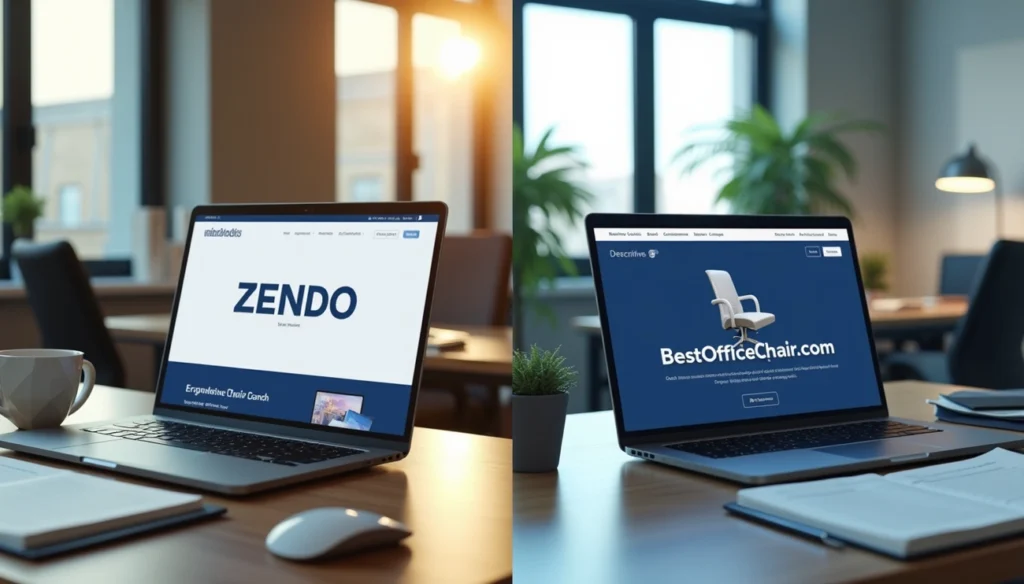
Scalability is maybe even the strongest reason why many businesses pick brandable domains. A descriptive name like “BestOfficeChairs.com” limits you if you want to sell desks or other furniture. A brandable name like “Zendo” lets you grow without boundaries.
Your business timeline should guide this decision. Do you need quick results in a specific niche? A descriptive domain might work better. Are you planning for long-term growth and brand value? A brandable domain gives you room to build something unique.
Smart companies often use both approaches – they combine brandable main domains with descriptive names for specific product lines or regional markets. This strategy balances brand identity with targeted relevance.
Note that your domain is just one piece of your brand strategy. No matter which path you take, success depends on delivering great products or services that customers need. The perfect domain opens doors, but your business must give people reasons to stay and come back.
Ultimately, choosing between a brandable and a descriptive domain depends on your business goals, audience, and long-term plans. If you want to evaluate all these factors systematically, this complete guide can help: The Complete Guide to Choosing a Domain Name
Key Takeaways
Understanding the strategic differences between brandable and descriptive domains can significantly impact your business’s long-term success and sales potential.
• Brandable domains offer superior scalability and legal protection – They’re easier to trademark and allow unlimited business expansion without name restrictions
• Descriptive domains provide immediate clarity and lower marketing costs – Users instantly understand your business purpose, reducing bounce rates and explanation needs
• SEO impact has shifted from keywords to content quality – While descriptive domains still get 2x more clicks for keyword searches, brandable domains can outrank through superior content
• Emotional connection drives long-term customer loyalty – Brandable domains create stronger emotional bonds with 66% of consumers choosing brands aligned with their values
• Consider hybrid strategies for maximum flexibility – Use brandable parent domains with descriptive extensions to combine brand consistency with targeted market relevance
The choice ultimately depends on your business timeline and growth ambitions. Descriptive domains excel for immediate niche traction, while brandable domains provide the foundation for building distinctive, scalable brands that can evolve beyond initial offerings.
FAQs
Q1. Is a keyword-rich domain name better than a branded one for business success? While keyword-rich domains can provide some SEO benefits, branded domains offer more flexibility and long-term value. Focus on choosing a short, memorable name that’s easy to type. If you can incorporate a relevant keyword, that’s a bonus, but it’s not crucial for success.
Q2. What are the most reliable domain extensions for businesses? The .com extension remains the most popular and trusted globally for commercial purposes. For non-profit organizations and community-focused entities, .org is highly regarded and conveys credibility.
Q3. How do brandable domain names impact long-term business growth? Brandable domain names offer superior scalability and flexibility. They allow businesses to expand beyond their initial offerings without being limited by a descriptive name, providing a foundation for building a distinctive brand that can evolve over time.
Q4. What advantages do descriptive domain names offer for new businesses? Descriptive domain names provide immediate clarity about a business’s purpose, potentially reducing bounce rates and marketing costs. They can be particularly beneficial for businesses seeking quick traction in a specific niche, as users instantly understand what the company offers.
Q5. How important is emotional connection in choosing a domain name? Emotional connection is crucial in domain name selection, especially for long-term customer loyalty. Brandable domains often create stronger emotional bonds, with research showing that 66% of consumers choose brands that align with their values. This emotional resonance can drive more engaged and loyal customer relationships.