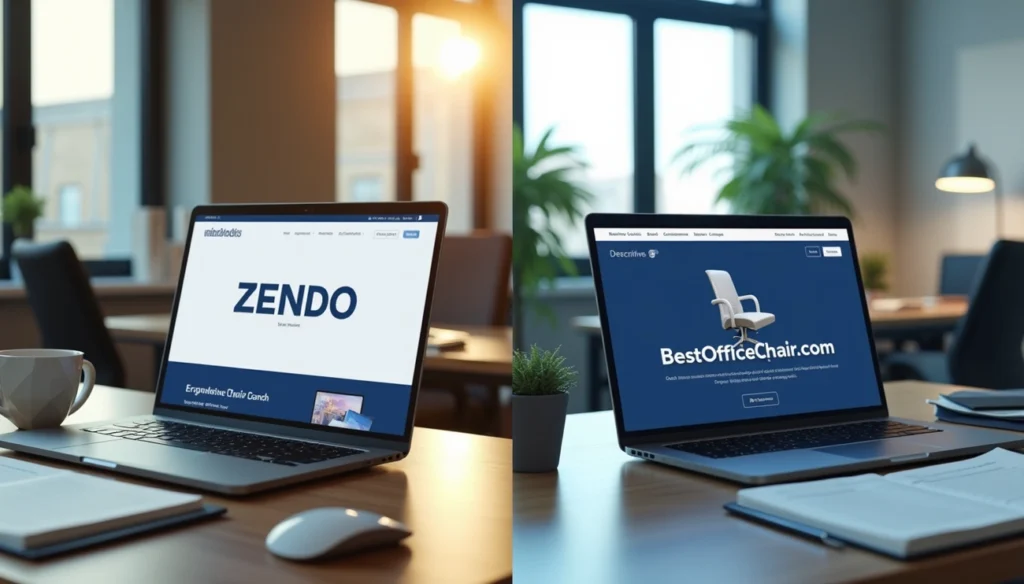
The ideal domain name length falls between 7 and 15 characters, excluding the extension. Our experience with clients shows shorter options perform better consistently. The most common pattern among high-performing websites has just two words that total around 7 characters.
But finding the perfect domain name length isn’t just about counting characters. On top of that, you need to think over how your domain name affects branding, memorability, and user experience. Your customers should remember and type your domain name easily, or you’ll create unnecessary barriers to your website.
This piece shares our expert insights on domain name length best practices. You’ll learn why domain length matters more than ever in 2026. We’ll give you a step-by-step process to find the perfect domain that balances brevity with brand clarity. These principles will set you up for long-term success whether you’re launching a new website or planning a rebrand.
Why Domain Name Length Still Matters in 2026
Your domain name serves as your brand’s foundation in the digital world by 2026. Everything starts with it – from customer emails to marketing initiatives and building trust. Domain name length remains a vital element that affects your digital presence, among other success factors.
Impact on branding and first impressions
Domain names have deep psychological effects. Users make snap judgments about website credibility within 50 milliseconds of seeing a domain name. These instant assessments substantially affect whether visitors get involved with your business or leave quickly.
Short, brandable domains create memorable brand identities that stick. Domain names between 5-8 characters match our cognitive limits perfectly. Psychologist George Miller suggested that most adults can store only 5-9 items in their short-term memory. The brain processes shorter domains more easily through “processing fluency,” which builds higher trust levels and better brand recall.
Businesses with concise, memorable domains shine through the digital noise. Take Airbnb – they changed their name from the lengthy “AirBedandBreakfast.com” to the shorter “Airbnb.com” to help their global expansion.
Influence on SEO and search visibility
Domain length affects user experience and SEO performance. Studies show shorter domain names rank higher in search results than longer ones. Shorter domains lead to fewer typing errors and better direct traffic—factors that boost your SEO metrics indirectly.
Mobile devices now generate over 59% of web visits as of late 2022. Long domain names become harder to type on smaller screens. Search engines give priority to mobile-friendly elements, so concise domains that users can type easily on small devices give you an edge.
User signals like dwell time and bounce rates matter to search engines. Visitors might leave quickly if they struggle with your domain name or find it irrelevant, which hurts these vital metrics.
User trust and credibility signals
Easy-to-pronounce domain names create what psychologists call “processing fluency.” This cognitive ease builds higher trust levels naturally. Simple, clear, and shorter domains encourage greater trust.
Domain psychology’s “trust triangle” has three elements: short domains that the brain processes easily, familiar terms that people recognize instantly, and relevant keywords that confirm user expectations. These elements are the foundations of powerful psychological cues about your business’s legitimacy.
Domains without hyphens, numbers, or special characters look more professional and credible. These elements can confuse users and hurt your brand’s credibility. To cite an instance, see how a domain like “App-le.com” or “Apple1.com” creates unnecessary confusion.
A smart domain length balances brevity for memory and length for clarity. This balance improves user experience and shows your brand as professional, trustworthy, and ready for long-term success.
Understanding Domain Structure and Length Limits

Image Source: Devopedia
Understanding the technical foundation of domain names helps immensely when choosing the ideal domain name length for your website. Let me break down the essential components that form the building blocks of your online address.
What is domain name length?
Domain name length refers to the total number of characters in your web address, including both the domain name itself and its extension. Technically speaking, domain name length is measured in octets (8-bit units), not simply characters. This distinction becomes important particularly when using non-English characters in international domain names.
When examining domain structure, it’s helpful to understand that domain names consist of a series of labels separated by dots. Each label represents a different level in the domain hierarchy. For example, in “www.example.com,” the labels are “www,” “example,” and “com,” each serving a distinct purpose in identifying your website’s location on the internet.
The total permissible length of a domain name cannot exceed 253 characters in its text form. Nevertheless, this limit seldom becomes an issue for most website owners, especially considering that shorter domains typically perform better for branding and usability purposes.
Second-level vs. top-level domains
Domain names follow a hierarchical structure read from right to left. The rightmost section is called the top-level domain (TLD), such as .com, .org, or .net. TLDs indicate the general purpose or nature of the website. Certain TLDs have specific requirements—for instance, .gov domains are restricted to government entities, while .edu domains are reserved exclusively for educational institutions.
The second-level domain (SLD) is the part directly before the TLD and typically represents your brand, company name, or the specific identifier you’ve chosen. In “example.com,” “example” is the SLD—the customizable portion that makes your domain unique. Second-level domains offer the opportunity to create a memorable online identity that resonates with your audience.
Interestingly, some country-specific domains use a structure where an additional label functions as part of the extension. These are known as country-code second-level domains (ccSLDs). For example, in “example.co.uk,” “co.uk” collectively functions as the extension, with “co” identifying a commercial entity in the United Kingdom.
Character limits and technical constraints
Domain names operate under specific technical limitations established by internet standards. Primarily, each label within a domain name can contain a maximum of 63 characters. Furthermore, the full domain name, including all labels and dots, must not exceed 255 octets in its technical representation.
For practical purposes, this translates to a maximum of 253 visible characters in text form. This slight difference exists because the technical storage of domain names includes length bytes that aren’t visible in the text representation.
Regarding character selection, domain names can contain letters (a-z), numbers (0-9), and hyphens (-). Nevertheless, there are important restrictions to remember:
- Hyphens cannot appear at the beginning or end of a domain label
- Numbers, while permitted, can create confusion when spoken
- Special characters and spaces are not allowed in standard domain registrations
- Domain labels cannot begin with the sequence “xn--” (reserved for internationalized domain names)
Most domain registrars enforce a minimum length requirement of 2-3 characters for second-level domains. This ensures domains remain sufficiently unique and identifiable within the vast internet ecosystem.
Understanding these technical parameters provides essential context as you evaluate the ideal domain name length for your website. Rather than viewing these as mere restrictions, consider them as the framework within which you’ll craft a domain name that balances technical requirements with marketing effectiveness.
Best Practices for Choosing the Right Domain Length

Image Source: Com Laude
Research shows that the ideal domain name length ranges from 7-15 characters. You can make your website more memorable and user-friendly by following time-tested best practices.
Keep it under 15 characters if possible
A clear pattern emerges from the world’s top websites—all but one of these domains are just 8 characters or fewer. This makes perfect sense. Short domains have clear advantages:
- People remember and type them correctly more often
- They look better on mobile devices and business cards
- Your email address looks more professional
The sweet spot for domain names lies between 6-14 characters. While domains can contain up to 63 characters per level, marketing experts say you should stay under 15 characters to get the best results.
Avoid hyphens, numbers, and double letters
Hyphens create problems in domain names. Search engines prefer domains without hyphens. Users often forget to type the hyphen in URLs. There’s another reason – if someone owns the non-hyphenated version of your domain, you’ll lose visitors to them.
Numbers can confuse people—they won’t know whether to type 5 or five. Double letters lead to typing mistakes and visual confusion. The solution is simple: use clean domain names without special characters.
Make it easy to spell and pronounce
Your domain should pass the “radio test.” Can someone spell it correctly after hearing it once? People share and remember domain names they can pronounce easily.
Test your potential domain names by reading them to others and asking for the spelling. Watch out for tricky spellings like “k” vs. “c” or words that sound alike but spell differently.
Balance between shortness and clarity
Shorter names work better, but clarity matters more. The best approach combines both brevity and meaning. Think over these points:
- Does it connect to your brand or offering?
- Will it stand out?
- Could people confuse it with competitors?
Try domainsnapai.com to generate domains that hit these marks while staying the right length. This tool helps you find available domains that are both short and memorable.
Your domain name is your digital identity. These length-based best practices will give you a website that’s available, professional, and memorable through 2026 and beyond.
How to Choose a Domain Name That Scales
A business’s long-term growth depends on picking the right domain name. Your domain name becomes your brand’s foundation and should grow alongside your business, unlike other decisions you can change later.
Avoid overly niche or restrictive names
Domain names with too much specificity create roadblocks during business expansion. A domain like “cityflowers.com” might work well for a florist at first, but limits options when adding plants, gifts, or garden supplies. Brandable alternatives like “cityblooms.com” give more flexibility while keeping the brand identity intact. The same applies to “RunningShoes.com” which lacks growth potential compared to broader names like “ActiveGear.com” that welcome future product lines.
Think about future products or services
Amazon’s strategic shift from “Cadabra.com” shows how a scalable domain adapts as companies grow beyond their original focus. “BobsBoots.com” becomes problematic when the business adds jackets and hats to its inventory, while “BobsOutfitters.com” allows natural growth without changing the brand. Smart startups choose domain names that match their vision and leave room for future changes or expansion.
Consider international or local reach
Your global goals shape your domain choice significantly. Businesses targeting multiple countries should skip country-specific TLDs that might restrict their perceived market reach. Local businesses focused on specific regions benefit from country-code TLDs that highlight their geographic presence.
Successful international companies secure multiple domain variations to:
- Shield their brand across different markets
- Stop competitors from grabbing similar names
- Keep options open for future growth
The best domain names blend specificity with adaptability. Your digital presence through 2026 and beyond needs a domain that’s broad enough for growth yet memorable enough to build strong brand recognition.
Step-by-Step Process to Find the Perfect Domain

Image Source: The TCP/IP Guide!
A systematic approach that balances creativity with technical aspects will help you find your perfect domain name in 2026. Let me share the process I’ve refined through my years as a domain consultant.
Brainstorm brandable and short ideas
Start by listing keywords that relate to your business, products, or services. Your focus should be on words that capture your brand’s essence instead of generic terms. The brainstorming phase should include different word pairs, clever phrases, and metaphors that could represent your business. A combination of your business name and a brief description often creates the most effective domains.
Use domain name generators for inspiration
Domain generators combine and refine words to create brandable, relevant options. Try domainsnapai.com to generate domains that stick in people’s minds. These generators pull available domain suggestions right as you type keywords. You’ll get better results by entering 3-5 seed concepts instead of basic keywords—experiment with abstract ideas or metaphors that match your brand’s tone.
Check availability and social handles
Your next step after finding potential names is to verify domain availability and matching usernames on social platforms. Tools like Namechk or BrandSnag show you if your chosen name exists across multiple platforms at once. Your brand’s authority depends on consistent names across all platforms.
Perform trademark and history checks
The USPTO’s TESS database helps you search trademarks to avoid infringing on existing ones before you commit. You should also look up your domain’s history with tools like Wayback Machine to spot any previous use with negative associations.
Choose the right TLD for your audience
The .com extension remains the most trusted and recognized, but your specific audience should guide your TLD selection. Industry-specific extensions like .tech or .photography signal relevance, and country-code TLDs make sense for location-based businesses. Registering your domain with multiple extensions can maximize your credibility and protection.
Conclusion
Your online success depends on picking the right domain name length. Our research shows that shorter domains between 7-15 characters perform better than longer ones. This sweet spot gives you a memorable brand name without any technical issues.
Your domain forms the core of your digital identity. Using best practices like avoiding hyphens, numbers, and limiting terms will improve user experience by a lot. A good domain should pass the “radio test” – people should spell it correctly just by hearing it.
Your domain should have room to grow with your business. Picking a name that allows expansion prevents getting pricey rebranding later. This protects your investment and keeps your brand consistent as you grow.
Technical rules matter with domains. Each label in your domain must stay under 63 characters, but keeping the whole domain under 15 characters works best. Research in cognitive psychology shows that shorter domains build more trust because they’re easier to process.
Our step-by-step process will help you find the perfect domain that combines brevity with brand clarity. You should start with focused brainstorming, get ideas from domain generators, check availability everywhere, and research thoroughly before making your choice.
The digital world keeps changing, but domain name rules stay the same. A well-chosen domain length builds a strong foundation online. Choose carefully – your domain will represent your brand at countless digital touchpoints for years ahead.
Key Takeaways
Choosing the perfect domain name length is crucial for building a strong digital presence that balances memorability with brand clarity.
• Keep domains between 7-15 characters – 70% of successful websites use 8 characters or fewer for optimal memorability and mobile usability.
• Avoid hyphens, numbers, and double letters – These elements create confusion, increase typing errors, and appear less professional to users.
• Choose scalable, brandable names over niche-specific ones – Broad domains like “ActiveGear.com” allow business expansion better than restrictive names like “RunningShoes.com.”
• Test the “radio test” – Your domain should be easy to spell and pronounce when heard aloud, ensuring effortless word-of-mouth sharing.
• Secure matching social handles and check trademark history – Consistent branding across platforms and clean domain history protect your brand reputation.
The ideal domain strikes the perfect balance between brevity for cognitive processing and clarity for brand recognition. Remember, your domain serves as your digital foundation – invest time in this decision as it will represent your brand across countless touchpoints for years to come.
FAQs
Q1. What is the ideal length for a domain name in 2026? The ideal domain name length is between 7-15 characters. Shorter domains around 8 characters or fewer tend to perform best for memorability and usability, especially on mobile devices.
Q2. How can I choose a domain name that will scale with my business? Select a brandable name that’s not overly specific to your current offerings. For example, “ActiveGear.com” allows for more expansion than “RunningShoes.com“. Consider your future products or services and potential international reach when choosing a domain.
Q3. Should I use hyphens or numbers in my domain name? It’s best to avoid hyphens, numbers, and double letters in domain names. These elements can create confusion, increase typing errors, and make your domain appear less professional to users.
Q4. What if my desired .com domain is already taken? Consider alternative top-level domains (TLDs) like .net, .org, or newer options like .io or .co. You can also try adding relevant words to your desired name or using domain hack techniques to create a unique and memorable domain.
Q5. How important is domain name length for SEO in 2026? While domain name length itself isn’t a direct ranking factor, shorter domains can indirectly benefit SEO. They’re easier to type, remember, and share, potentially leading to more direct traffic and better user experience signals, which can positively impact search rankings.