A company’s domain name shapes its brand identity for 68% of customers. Your online success depends significantly on selecting the right domain name.
The internet now hosts over 260 million registered domains, with .com extensions claiming more than 60% of the market. This makes it harder for businesses to stand out online. Standard domains cost $10-$20 yearly, while premium domains command prices ranging from thousands to millions of dollars.
This detailed 2026 guide offers expert tips to help you choose a domain name that reflects your business perfectly. The guide will help you understand what makes a domain name effective and how to guide through the 1,400+ available TLDs. You’ll also discover practical strategies when your preferred domain isn’t available, whether you’re creating a new website or rebranding an existing one.
You’ll gain the knowledge and tools needed to pick a memorable, brandable domain that drives your business toward lasting success.
What Makes a Good Domain Name?
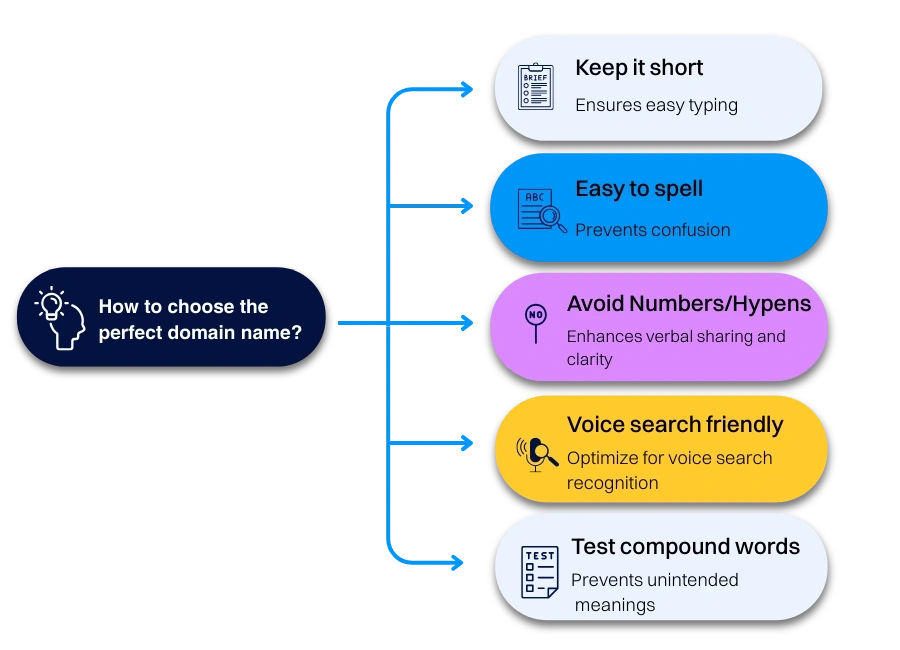
Image Source: Dynadot
Your online presence starts with picking the right domain name. A domain isn’t just a web address—it’s your digital identity, first impression, and a powerful marketing tool. The right domain helps your brand stand out in today’s crowded digital world.
Short, simple, and easy to type
The average domain contains only 6.4 characters among the top 250 websites worldwide. This explains a simple truth: short names stick better in memory. Experts suggest keeping your domain under 15 characters when you can.
Short domains cut down typing mistakes, especially since most web traffic comes from mobile users. Take “zoom.com” and “videoconferencingtoolonline.com” as examples—the first one clicks instantly and it’s much easier to type.
Good domain names should pass the “radio test”—someone who hears your domain once during a podcast or chat should type it correctly without asking again. This works whatever the length; people should know how to spell your domain right away.
You should keep your domain under 14 characters if possible. All the same, don’t make a domain shorter at the cost of clarity. “PastaScience.com” works better than “PastaSci.com” even though it’s longer.
Memorable and brandable
The best domains stick in visitors’ minds naturally. They have distinctive sounds—maybe even through alliteration, rhyme, or an unexpected twist—that make them easy to say.
Brandable domains catch attention because they work as unique identifiers instead of basic descriptions. Look at “BuyCheapLaptops.com” (generic/descriptive) versus “Dell.com” or “Lenovo.com” (brandable). Generic domains tell what you do but lack character and staying power.
Great domain names often trigger specific emotions or mental pictures. Names like “PayPal” hint at reliability and build trust quickly. Domains that have rhythm—like “Snapchat” or “Fiverr”—tend to stick in memory better.
Avoids numbers, hyphens, and confusing spellings
Hyphens in domain names raise red flags quickly. Nobody knows whether to say “dash” or “hyphen”, and most users forget them when typing. Domains with multiple hyphens look spammy and unprofessional.
Numbers create confusion too—should people spell out the word or use the digit? To cite an instance, “sk8er.com” versus “skater.com” or “global2.com” versus “globaltwo.com“. Numbers work only when they’re part of your brand already, like “3m.com“.
Weird spellings cause problems too. Companies like “flikr.com” (later “flickr.com“) spent fortunes buying the correct spelling later. Skip slang like “expressurself4u.com” that looks unprofessional and nobody can guess correctly.
Words that sound alike but have different spellings confuse users. “foryou.com” or “fouryou.com” leaves people guessing the right one. Double letters in domains lead to more typos—”pressstarttutor.com” trips people up more than domains without repeated letters.
These basics help you create a domain name that works as a valuable business asset and builds trust naturally.
Expert Tips for Choosing a Domain Name
Picking the right domain name needs strategy, research, and quick decisions. These expert tips will help you find and grab the perfect web address for your business once you know what makes a good domain name.
Use a domain name generator for ideas
Coming up with domain name ideas can be tough, since millions are already taken. Domain name generators make this easier by showing you lists of available options based on your keywords. These AI-powered tools mix your input with different prefixes, suffixes, and related terms to suggest domains you might not have thought about.
The best way to use a domain generator is to type in words that describe your business – your name, location, or industry. The most effective website names stick in people’s minds, so let your creativity flow. You might find options that work better than your first idea as you look through the suggestions. If you haven’t settled on a business name yet, start with a Business Name Generator and then check which domains are free.
The next time you need domain ideas, domainsnapai.com can help you create domains that fit your brand while making sure they’re available.
Check domain availability early
Many entrepreneurs make the mistake of getting attached to a domain name before seeing if it’s taken. You should check domain availability right when you start thinking of names. This saves you time and keeps you from getting too invested in names you can’t have.
Most registrars have quick search tools that show you if domains are available and how much they cost yearly. These tools usually suggest other options with different extensions or word combinations if your first choice isn’t free. Make sure you can get a matching domain before you lock in any business name or brand decisions.
Avoid legal issues by checking trademarks
A domain might be free to register but could still step on someone else’s trademark—which could get pricey and force you to rebrand. Do a detailed trademark search before you commit to a domain name to avoid legal trouble.
Start by looking through the U.S. Patent and Trademark Office (USPTO) database for registered and pending trademarks. Look beyond exact matches to include similar words, misspellings, and different spellings. Then ask yourself: Does your site sell similar things? Could your domain take business from a site with a similar name? Would people mix up your domain with another one? You should pick something else if you answer “yes” to any of these questions.
Test pronunciation and spelling with others
A domain name can look great written down but fail the “radio test”—when someone can’t spell it right after hearing it once. Test your domain with at least five people who don’t know about your business before you buy it. Here are some good ways to test:
- Call friends or family and ask them to repeat and spell the domain
- Send voice texts with the name and ask them to type it back
- Do in-person tests and watch how people react
Watch for words that sound alike but have different spellings, like “new” and “knew”. Make sure people can say your domain when they see it and spell it when they hear it during testing.
Match your domain with social handles
Your brand looks stronger when your website and social media accounts use the same name. Try to get the same username across all platforms as your domain name.
Matching handles make it easy for customers to find and remember you. You can just say “Find us at @yourbrand” instead of listing different handles for each platform. This helps your brand look more professional and stops others from copying you. Use tools like Namechk or KnowEm to check username availability on major social platforms before you buy any domain.
Act fast before someone else grabs it
Register your domain right away once you find one that’s available and passes all these tests. Good domains can disappear fast, sometimes minutes after someone searches for them. You might lose your perfect domain name to someone else if you wait too long.
You might want to register different versions to protect your brand, including other extensions (.org, .net) and common misspellings. This stops competitors or troublemakers from creating confusion with similar domains. If you can’t get your ideal domain, try adding words before or after, using a different extension, or looking at domain marketplaces for ones that are already owned.
Choosing the Right Domain Extension
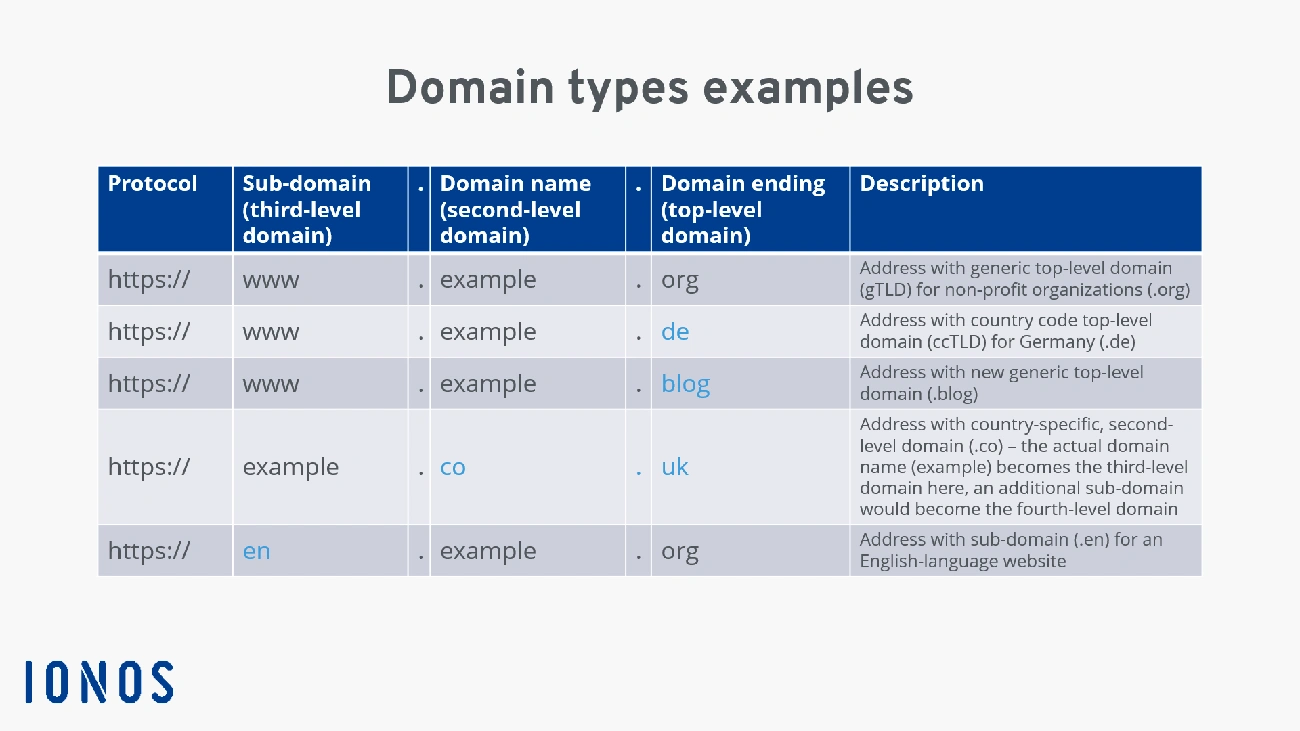
Image Source: IONOS
Your domain extension tells visitors a lot about your brand before they read anything. These days, you can choose from over 1,500 domain extensions. Picking the right one means knowing what each brings to the table and how people see them online.
Why .com is still the best choice
The .com extension remains the undisputed king of domains. It powers more than 53% of all registered websites worldwide. This isn’t random – .com domains just feel more trustworthy to most people. Research shows that 67% of users trust .com domains more than other options.
Though it started as short for “commercial,” .com has grown into something bigger – it’s now the internet’s common language. People have registered over 233 million .com domains. Most users type .com automatically when visiting websites. This familiarity brings real benefits:
- More clicks from search results
- Better trust from users
- Easier to remember
- Less chance of losing visitors to competitors
Getting a .com domain might be tough because they’re so popular. But the investment usually pays off through better brand image and customer confidence.
When to use .org, .net, or .co
While .com leads the pack, other extensions work great in specific cases:
.org (11 million domains) – Perfect for nonprofits, educational sites, and purpose-driven groups. It builds trust right away and works best when your mission matters most. Wikipedia.org shows just how authoritative this extension can be.
.net (12 million domains) – This was made for network businesses and infrastructure providers. It might not be as well-known as .com, but tech companies still see it as a solid choice when they can’t get their preferred .com.
.co (3 million domains) – Startups and tech companies love this one for its clean, international feel. It comes across as fresh and modern, but watch out – users might type .com out of habit. Take Hinge (hinge.co) as a success story.
New TLDs: .ai, .shop, .xyz and their use cases
The domain world keeps changing as specialized extensions catch on:
.ai (400,000+ domains and growing faster) – AI startups can’t get enough of this one. It screams state-of-the-art tech and has become the default for companies working with machine learning, LLMs, or generative tools. Tech folks now call it “the new .COM in the automation era”.
.shop (1.2 million domains) – Made just for e-commerce, this name says exactly what it does. Even Netflix runs its merchandise store at netflix.shop. Direct-to-consumer brands pick it more often now to show they’re ready for business.
.xyz (4-5 million domains) – Web3 projects and creative groups love this one. It got a big boost when Alphabet (Google’s parent company) chose abc.xyz. Nobody quite knows where it’s headed, but it looks promising for new tech areas.
Country-specific extensions and local SEO
Country-code domains like .uk, .de, or .ca pack a punch in local markets. Websites using these extensions grabbed 56% of top three spots in Google searches across 15 international markets. That’s a big deal for SEO.
Search engines know exactly where you operate when you use a country code. This helps you show up more often in local searches, giving you an edge over big global players.
Local domains do more than just help with SEO – they make people feel at home. Users trust websites more when they see their country’s domain extension. German users, for example, tend to trust .de domains more than generic ones.
But there’s a catch. Using country domains might make it harder to reach people worldwide since search engines might think your content only matters in that country. If you want to go global, you’ll need to weigh these pros and cons carefully.
Using Keywords in Your Domain Name

Image Source: Debbie Emmitt
Keywords in domain names used to be a big deal for search engine rankings. These days, their effect has changed, but smart keyword usage can still boost your online presence.
How keywords help with SEO
Your domain’s keywords create instant context for users and search engines alike. Research shows that websites with relevant search terms in their domains get almost twice as many clicks compared to those without. The higher click-through rate tells search algorithms that your site matters, which helps your SEO.
Search engines can figure out what your website is about just from your domain name, even before they look at your content. This quick categorization helps new websites that haven’t built much authority yet. Local businesses see better results in geographic searches when they use location-based keywords like “ChicagoPlumber.com“.
Partial-match domains that blend brand names with keywords often work better than exact-match domains that might look spammy. This reflects how Google looks at domain keywords now.
Finding the right balance between brand and keyword
The best domains balance searchability with brand identity. Stuffing too many keywords into your domain can cause problems:
- Users might see it as spammy or untrustworthy
- Your business might outgrow the domain name
- Generic terms could lead to trademark issues
But leaving out SEO completely from your domain name could hurt your search visibility. The answer lies in balance – pick a domain that builds your brand first but smartly uses one or two relevant keywords.
Quality beats quantity every time. Instead of cramming in keywords, choose one or two terms that really match what you do. This approach helps create a memorable brand while keeping SEO benefits.
Examples of keyword-rich domain names
Good keyword domains show what you do without looking unprofessional. Here are some balanced examples:
- FreshBakeryDelights.com – Shows exactly what the business offers
- LocalCarRental.com – Makes the service clear
- OrganicCoffeeBeans.com – Specific but easy to remember
Stay away from domains like “BestCheapDiscountedJeans.net” that look spammy and generic. Your domain should sound natural when you say it out loud. If it sounds more like a Google search than a brand name, you should probably rethink it.
Existing businesses might want to mix their brand name with a relevant keyword – like “RedMoonOrganicCoffee.com” instead of just “OrganicCoffee.com“. This approach keeps your brand identity while getting keyword benefits too.
Planning for Long-Term Growth
Smart domain selection today will save you major headaches as your business grows. Many companies outgrow their original domain names just like they outgrow their first office spaces. This often leads to costly disruptions.
Pick a name that scales with your business
Your business might expand in unexpected ways over the next few years. Take Netflix as an example – their name worked perfectly whether they mailed DVDs or streamed shows. Your domain should leave room for future directions. A domain that’s too specific to your current offerings will limit you when you vary your product line or enter new markets.
A flexible domain helps you progress while keeping your brand recognition strong. To cite an instance, Amazon.com grew from books to selling almost everything, while “BestOnlineBookstore.com” would have held them back. The same goes for a clothing brand – “StyleHouse.com” gives you more room to grow than “MensSuits.com.”
Avoid overly narrow or trend-based names
You should stay away from passing trends when picking domain names. What sounds clever now might feel outdated in a few years. Domain names with trendy terms or tech references can become obsolete quickly. Just think about being stuck with “BestVHSDeals.com” after DVDs took over.
Generic-sounding domains age better than names tied to specific fads or technologies. Names that reflect timeless concepts about your core business values stay relevant longer. That’s why domains like Apple.com and Dell.com have worked for decades—they’re broad enough to cover growing product lines.
Buy multiple variations to protect your brand
Online competition makes securing multiple domain variations crucial for brand protection. Smart domain buying prevents problems like domain squatting, where others register versions of your name to profit from your success.
You should buy domains that:
- Cover common misspellings and typographical errors
- Include hyphenated versions of your name
- Secure relevant geographic extensions for markets you serve or plan to enter
- Protect future product or campaign names
These variations create a protective shield around your brand. This strategy becomes especially valuable for high-visibility businesses since securing variations costs little compared to potential brand damage. It also helps to redirect these alternative domains to your main site. This ensures customers find you and captures traffic that might get lost otherwise.
Your domain name choice should focus on scalability to avoid expensive rebranding later while protecting your growing digital presence.
What to Do If Your Ideal Domain Is Taken
Image Source: Verpex
Your dream domain name might already be taken, but don’t lose heart. You’ll find several smart ways to grab an excellent alternative.
Try a variation or add a prefix/suffix
A taken domain name doesn’t mean the end of your search. Adding meaningful prefixes or suffixes could solve your problem. Names starting with “Get,” “Try,” or “My” work great. You could also add “HQ,” “App,” or “Online” at the end. Let’s say YogaDog.com isn’t available – YogaDogHQ.com keeps your brand’s identity intact. domainsnapai.com helps users find domains that match their vision and are ready to register.
Use a different domain extension
The .com version might be gone, but other extensions could work just as well. Looking beyond .net and .org, you’ll find industry-specific TLDs that showcase your business type. Creative professionals love .studio, while tech companies often go for .io or .ai. The good news is that most people find you through search or links anyway, so your extension type rarely matters.
Check domain marketplaces for pre-owned options
Sedo, Flippa, and GoDaddy Auctions have plenty of great domains up for sale. These platforms keep both buyers and sellers safe. Patient buyers sometimes stumble upon premium domains at surprisingly good prices.
Negotiate with the current owner
The domain you want might still be within reach if you talk to its current owner. Look up their contact details through WHOIS or check the website’s Impressum section. Smart negotiators let the owner speak first. Stay professional throughout the process and spell out all payment and transfer details clearly.
Conclusion
Picking the right domain name is a vital step toward your online business success. This piece covers strategies that will help you pick a domain name that represents your brand and sets you up for future growth.
Your domain name does more than serve as a web address – it’s your digital identity and first impression. Make it short, memorable, and brandable. Stay away from hyphens, numbers, and unusual spellings that might throw off potential visitors.
The extension you pick can affect how people see your brand. The .com extension remains the top choice for most businesses. Other options like .org, .net, or newer ones such as .ai or .shop might work better based on your industry and target audience.
Of course, keywords matter in domain selection. The challenge lies in balancing SEO benefits with a strong brand identity. Your domain should grow with your business instead of holding you back.
Quick action matters once you spot an available domain that fits your needs. The perfect domain could vanish minutes after your search. If someone already owns your ideal choice, try adding prefixes or suffixes, look at different extensions, browse domain marketplaces, or reach out to the current owner.
Your domain name will stick with your business throughout its online presence. This investment needs careful thought now to avoid getting pricey rebranding down the road. These expert tips will help you pick a domain name that builds trust, boosts recognition, and supports your business goals for years ahead.
FAQs
Q1. What are the key elements of a good domain name? A good domain name should be short, simple, and easy to type. It should also be memorable, brandable, and avoid using numbers, hyphens, or confusing spellings. Aim for a name that’s under 15 characters and passes the “radio test” – meaning someone can spell it correctly after hearing it once.
Q2. How important is the .com extension compared to others? The .com extension is still considered the best choice for most businesses. It accounts for over 53% of all registered websites globally and is seen as more trustworthy by users. However, alternatives like .org, .net, or newer options such as .ai or .shop can be suitable depending on your industry and target audience.
Q3. Should I include keywords in my domain name? Including relevant keywords in your domain name can help with SEO and click-through rates. However, it’s crucial to find the right balance between keywords and brand identity. Focus on quality over quantity, selecting one or two terms that truly represent your core offering without sacrificing professionalism or memorability.
Q4. How can I protect my brand when choosing a domain name? To protect your brand, consider purchasing multiple domain variations. This includes common misspellings, hyphenated versions, and relevant geographic extensions. Also, choose a name that can scale with your business and avoid overly narrow or trend-based names that might limit future growth.
Q5. What should I do if my ideal domain name is already taken? If your ideal domain is unavailable, you have several options. Try adding relevant prefixes or suffixes to your brand name, use a different domain extension, check domain marketplaces for pre-owned options, or consider negotiating with the current owner. Remember to act quickly once you find an available domain that meets your criteria.